
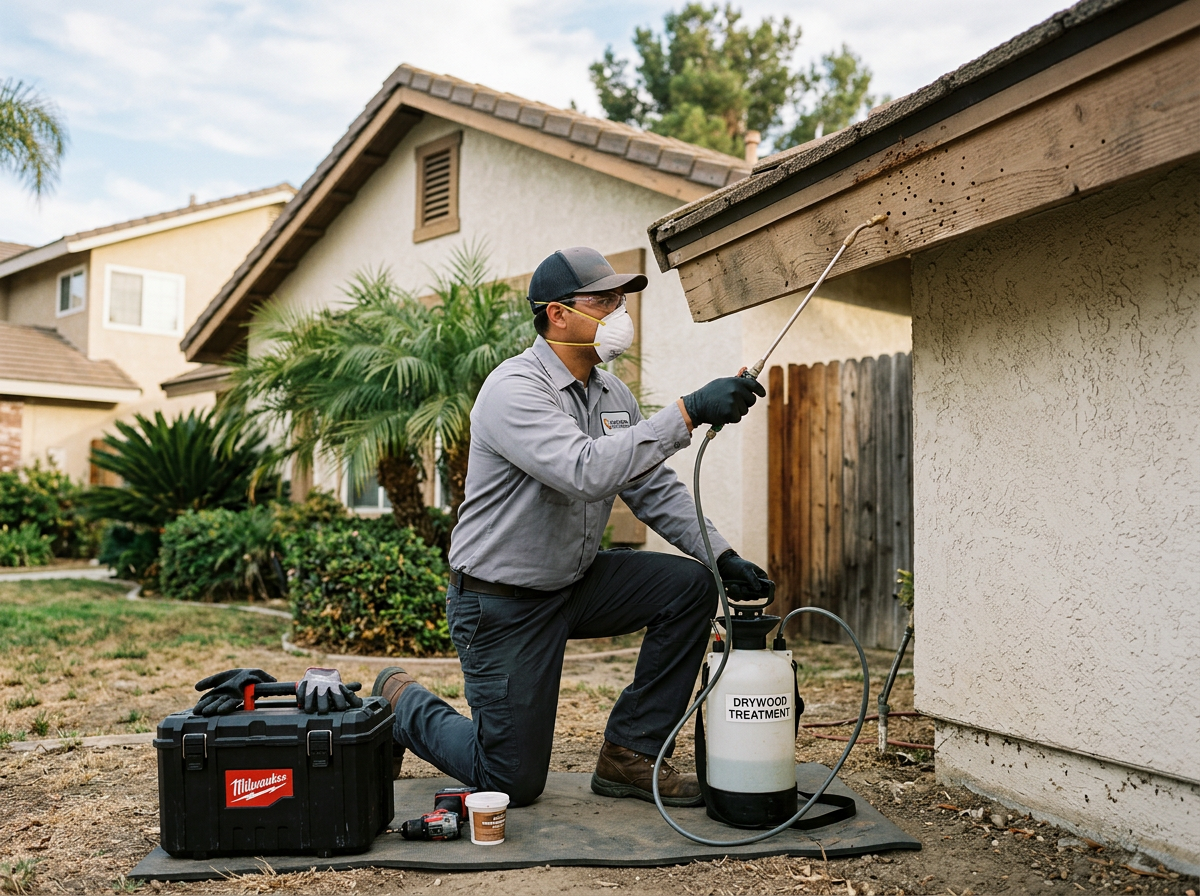
Lone Pine sits along US-395 in Inyo County as the main gateway to Mount Whitney and the Alabama Hills. Homeowners here deal with termite pressure that follows irrigation ditches, septic fields, and any moisture from leaks rather than broad soil dampness.
Technicians from the Tehachapi base reach Lone Pine via US-395, passing through Independence and Big Pine on the same route. Service calls focus on the scattered cabins, older ranch houses, and vacation properties that define the area.
High desert conditions with hot summers and freezing winters mean termite activity stays localized. Crews inspect around shaded slabs, drip lines, and any wood that stays in contact with irrigated soil.
Termite Treatment Services in Lone Pine, CA
Termite Treatment in Lone Pine
Termite treatment in California begins with accurate species identification because drywood and subterranean termites re…
Details →Drywood Termite Control in Lone Pine
Targeted drywood termite control that identifies frass and kick-out holes then applies localized treatments suited to Ca…
Details →Subterranean Termite Control in Lone Pine
Soil-applied barriers and monitored baiting for subterranean termites that build mud tubes on foundations in inland Cali…
Details →Termite Fumigation and Tenting in Lone Pine
Whole-structure fumigation and tenting for drywood termite infestations that exceed localized treatment options.…
Details →Termite Control in Lone Pine
Termite control across California starts with species identification that determines whether spot treatments, soil barri…
Details →Termite Inspection in Lone Pine
Detailed termite inspection across Tehachapi and California that locates drywood and subterranean activity in crawl spac…
Details →Escrow and Section 1 Termite Reports in Lone Pine
Detailed WDO inspections and Section 1 reports that support escrow timelines across Tehachapi and surrounding California…
Details →Around Lone Pine
We regularly work near:
- 📍Alabama Hills
- 📍Mount Whitney Portal
- 📍Lone Pine Film Museum
Termite Treatment in Lone Pine — Local Notes
- •Termite activity concentrates near irrigation lines and leaks rather than ambient soil moisture in the high desert setting.
- •Cabins and second homes often sit on raised foundations or slabs where shaded areas and drip irrigation create entry points.
- •Access to remote properties along US-395 and side roads requires checking for wood-to-soil contact around septic fields and outbuildings.
- •Seasonal occupancy means inspections focus on areas that stay damp during short summer use periods.