
2026-09-16 ·
Termite Treatment Options for Tehachapi's Dry Climate
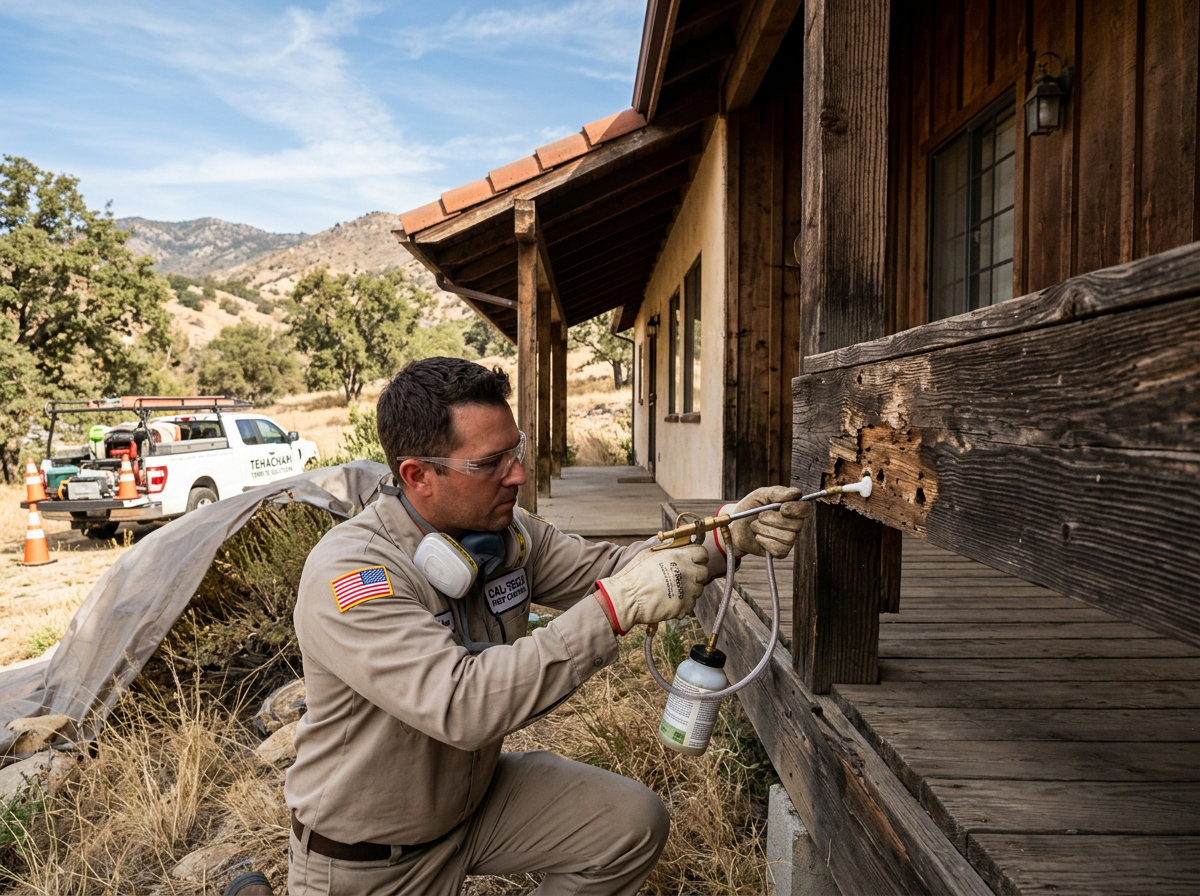
In Tehachapi's dry climate, termite treatment options center on drywood species through spot treatments or local fumigation, with whole-structure tenting used when infestations reach multiple areas of a home. These methods address frass pellets and wood damage without relying on moisture-dependent soil barriers common elsewhere in California.
Drywood Termite Treatment in Arid Tehachapi Conditions
Drywood termites thrive in Tehachapi because low rainfall and seasonal occupancy in foothill cabins limit the moisture that subterranean colonies need. Treatment begins with identifying frass pellets near window sills or baseboards rather than mud tubes along foundations. Spot treatments apply termiticide directly into galleries within 2–4 inches of affected timber, preserving the rest of the structure. When colonies extend beyond accessible zones, local fumigation targets specific rooms or sections. Whole-structure tenting becomes necessary once activity appears in 3 or more separate locations. These approaches suit old-growth timber in dirt crawl spaces where clearance between soil and wood often measures under 12 inches, allowing easy access for inspection but complicating liquid soil applications.
Subterranean Approaches Despite Limited Moisture
Even in dry Tehachapi settings, subterranean termites can appear near irrigation leaks or irrigated landscaping. Treatment here uses bait stations placed 10–20 feet apart along the foundation perimeter after an initial inspection confirms activity. Liquid soil barriers require trenching 6–8 inches deep and wide around the structure, then applying product before backfilling. Baiting works better for seasonal homes because stations remain active year-round without constant moisture. Property sales often trigger these checks through escrow inspections that note any visible signs. Linking drywood and subterranean differences helps homeowners choose correctly for their site conditions.
When Whole-Structure Tenting Fits Tehachapi Homes
Whole-structure tenting applies when drywood activity spreads through inaccessible attic spaces or multiple wall voids common in older Tehachapi builds. The process requires residents to vacate for 2–3 days while the structure is sealed and treated. This option suits cabins with limited crawl-space access where spot treatments cannot reach all galleries. Tenting eliminates colonies in one visit but demands follow-up checks to confirm no re-entry points exist. It pairs well with properties on sloped lots where soil barriers prove difficult to install evenly.
Inspection First for Accurate Treatment Selection
An inspection identifies whether frass or tubes indicate drywood or subterranean activity before any treatment begins. Technicians examine crawl spaces, attic framing, and exterior wood-to-soil contact points measuring less than 6 inches. This step prevents mismatched methods, such as applying soil barriers where drywood pellets are the only evidence. Homeowners in Tehachapi benefit from scheduling checks before escrow deadlines or after winter rains that may reveal new activity. Follow-up monitoring then tracks treated areas over subsequent seasons.
For continued reading on distinguishing species common to Kern County, see the comparison of drywood versus subterranean termites. Details on targeted drywood methods appear under drywood termite control. Whole-structure options are outlined in termite fumigation and tenting. Initial findings are covered in termite inspection resources.