
2026-09-16 ·
How to Identify Termite Damage in Tehachapi Homes
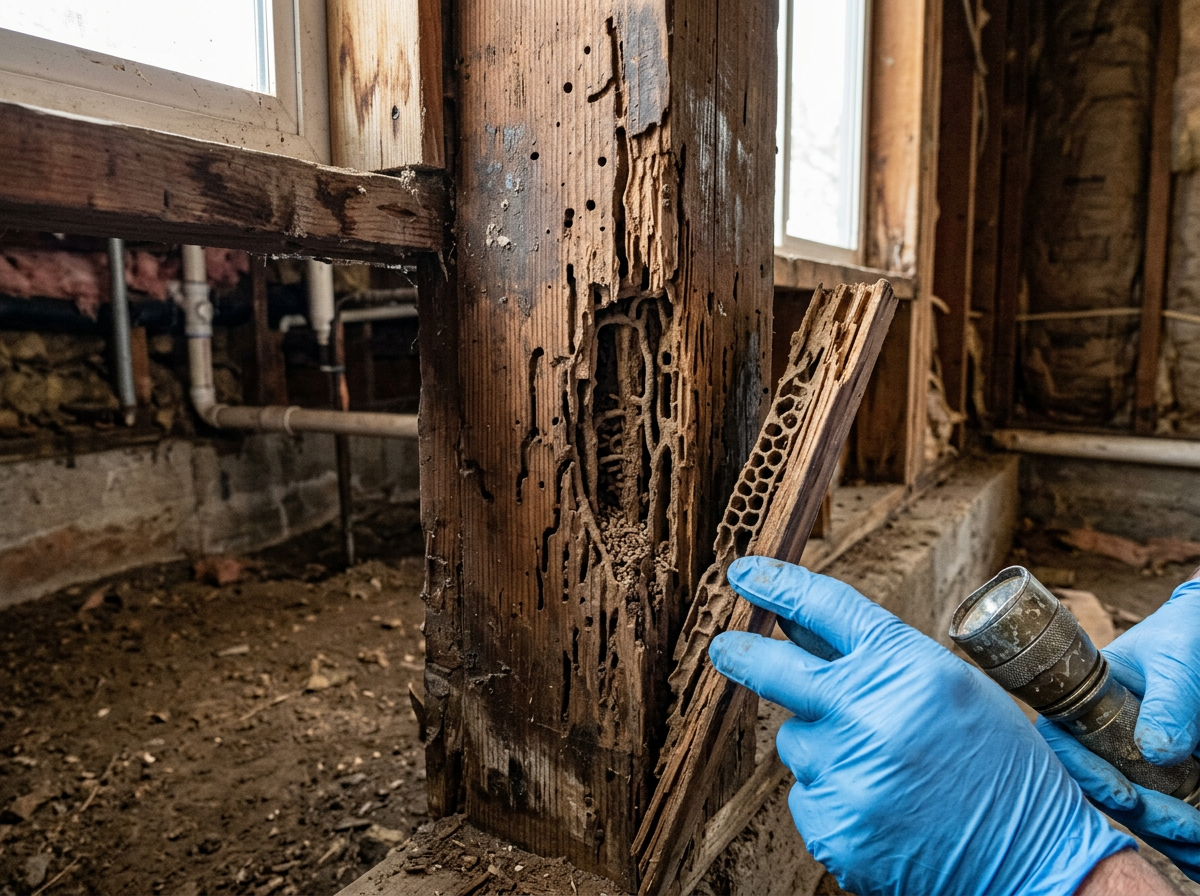
Tehachapi homes show termite damage most often through frass pellets near baseboards for drywood species or mud tubes along foundation walls for subterranean ones, especially in foothill cabins with dirt crawl spaces and old-growth timber.
Recognizing Drywood Termite Evidence
Drywood termites produce frass pellets that resemble fine sawdust or coffee grounds and accumulate in small piles below exit holes. These pellets feel gritty when rubbed between fingers and differ from the smoother texture of wood shavings. In Tehachapi's seasonal cabins, damage often appears in attics or window frames where wood meets stucco, and residents notice hollow sounds when tapping infested beams. Spot treatment or local fumigation addresses these colonies once pellets confirm activity. Old timber in crawl spaces with limited clearance under 18 inches increases risk because drywood colonies expand slowly without soil contact. Homeowners who inspect during winter months catch early pellet signs before spring swarm activity begins.
Spotting Subterranean Termite Indicators
Subterranean termites build mud tubes that run vertically along foundation walls or through expansion joints, protecting workers from dry air. These tubes measure about 1/4 inch wide and feel moist inside when broken open. In Tehachapi areas with irrigation around homes, tubes appear after leaks create soil moisture near sill plates. Check for blistered paint or sagging floors above crawl spaces where soil sits closer than 6 inches to wood framing. Bait stations spaced 10 feet apart around the perimeter can monitor activity once tubes indicate a colony. Seasonal occupancy means tubes may go unnoticed until a sale triggers an escrow inspection. Post-rain periods raise tube visibility along exterior stucco because moisture draws workers upward.
Checking Vulnerable Areas in Tehachapi Homes
Crawl spaces under Tehachapi cabins with old-growth timber require flashlight inspection for frass pellets on plastic vapor barriers or mud tubes crossing dirt floors. Attics show damage in rafters where seasonal heat draws drywood colonies, and residents hear faint clicking sounds during quiet evenings. Exterior stucco near irrigation lines develops tubes after leaks soften soil, while window sills collect pellets that homeowners sweep away without noticing the source. Local wood types influence susceptibility, with softer species showing faster hollowing. Maintain at least 18 inches of clearance between soil and joists to reduce entry points. Local wood types and termite susceptibility in Tehachapi explains how different lumber ages affect visible signs.
Next Steps After Spotting Signs
Document pellet locations and tube photos before contacting a local inspector for confirmation. Whole-structure tenting requires 2–3 days away from the home when drywood colonies span multiple rooms, while liquid soil barriers treat subterranean activity along trench lines dug 6–8 inches deep. Termite inspection services provide detailed mapping of active areas without assuming clearance on any report. Post-rain termite risks for Tehachapi residences outlines how irrigation changes increase tube formation after storms. Regular checks every spring and fall catch new evidence before it spreads through seasonal-use structures.