
2026-09-16 ·
What Tehachapi Homeowners Should Expect During a Termite Inspection
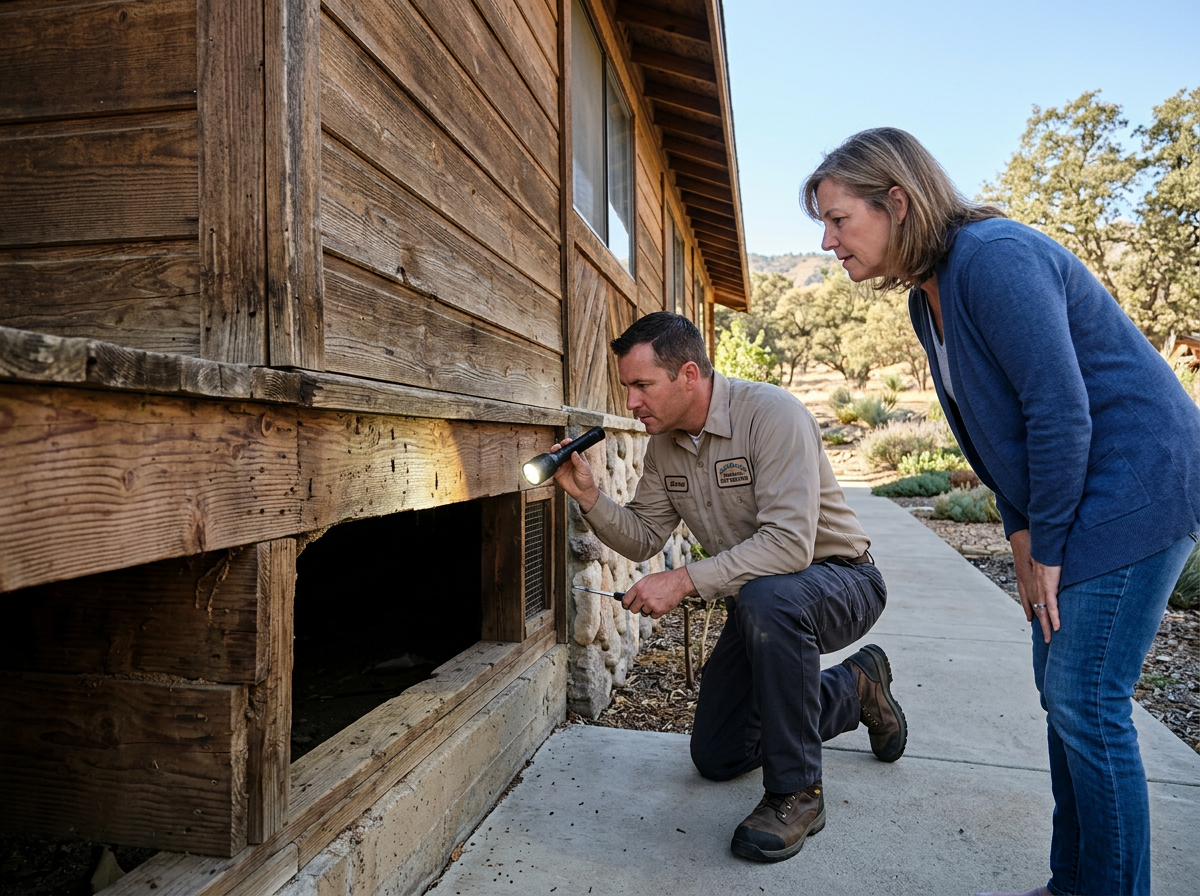
A termite inspection in Tehachapi usually lasts 45 to 90 minutes and focuses on accessible wood, crawl spaces, and moisture sources common to foothill and desert-edge properties. Inspectors begin at the exterior, checking soil-to-wood contact and any areas where irrigation or leaks have occurred. They then move indoors and under the structure, using flashlights and probing tools to examine framing and subflooring. The process ends with a written report that notes findings and recommended next steps.
Preparing Your Property for the Visit
Homeowners should clear access to crawl space entries and attic hatches before the inspector arrives. Move stored items at least three feet away from foundation walls so the inspector can examine the full perimeter. Trim vegetation touching the siding so that 6 inches of clearance between soil and wood remains visible. Pets should be secured in a separate area during the walk-through to avoid distractions.
Areas Inspectors Examine in Tehachapi Homes
Inspectors pay close attention to dirt crawl spaces under older cabins because these spaces often contain old-growth timber resting close to the ground. They look for frass pellets on horizontal surfaces as evidence of drywood activity and mud tubes along foundation walls that indicate subterranean termites. Attic framing receives the same scrutiny, especially where seasonal occupancy allows undetected moisture buildup. Exterior stucco and siding joints are checked for small exit holes or shelter tubes near irrigation lines.
Common Signs Found During Local Inspections
Drywood termites produce small, sand-like pellets that fall from kick-out holes, while subterranean termites build shelter tubes that connect soil to wood. In Tehachapi, inspectors often note both types because foothill cabins can host drywood colonies while irrigated yards attract subterranean activity. They also document any wood-to-soil contact less than 6 inches and any leaks that keep framing damp. These observations help determine whether spot treatment, local fumigation, or bait stations may be needed later.
How Findings Are Documented
The inspector records every accessible area on a standardized form and photographs visible evidence. Homeowners receive the report the same day or the following morning, with clear language describing each location and the type of termite activity observed. When a property is in escrow, the report follows the format required for Escrow and Section 1 Termite Reports. Readers can compare typical drywood and subterranean patterns in the article Drywood Versus Subterranean Termites in Kern County.
Next Steps After the Inspection
Once the report is delivered, homeowners can schedule any recommended work through Termite Inspection services or review treatment options on the Termite Treatment page. If post-rain conditions have recently increased moisture, the related post Post-Rain Termite Risks for Tehachapi Residences explains seasonal timing. The inspection itself does not include treatment; it only identifies conditions that may require further attention.