
2026-09-16 ·
Local Wood Types and Termite Susceptibility in Tehachapi
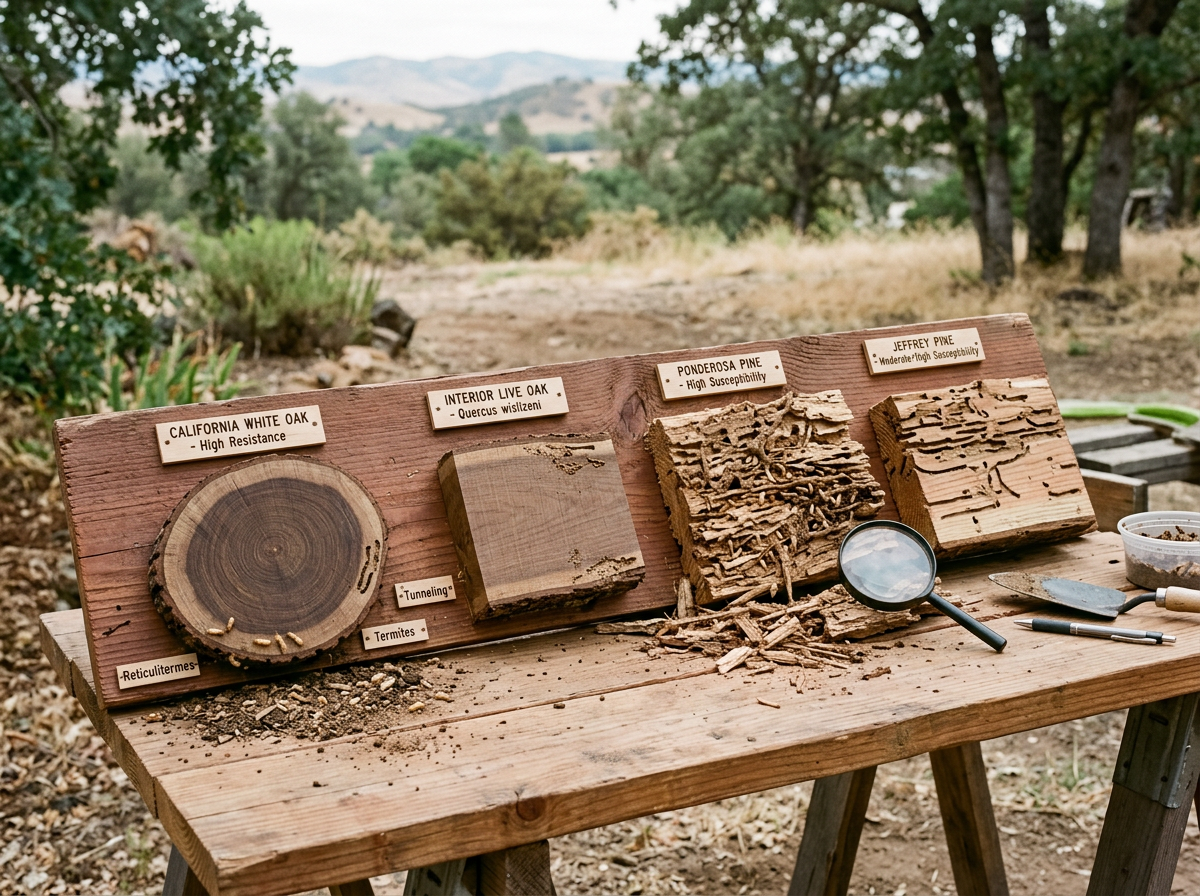
Tehachapi homes and cabins commonly feature ponderosa pine framing and trim that drywood termites attack more readily than oak or other hardwoods, while subterranean termites target any wood touching soil regardless of species when moisture is present.
Ponderosa Pine Susceptibility in Tehachapi
Ponderosa pine appears frequently in older foothill cabins and newer builds around Tehachapi because the species grows locally and supplies straight, workable lumber. Its lower density and higher cellulose content allow drywood termites to establish colonies faster than in denser species, with visible frass pellets often appearing near baseboards within two to three years of initial entry. Seasonal occupancy leaves these structures without consistent heating or cooling, letting interior wood moisture levels fluctuate and create favorable conditions for termite development. Homeowners notice exit holes and pellet accumulations first in attics and wall voids where pine studs run vertically. Spot treatments reach isolated colonies in pine but require follow-up inspections because the wood's open grain lets termites move between treated and untreated sections. Full-structure approaches become necessary once activity spreads across multiple rooms.
Oak and Hardwood Performance
Oak timbers and trim used in Tehachapi residences resist initial drywood termite entry better than pine because the tighter grain and higher tannin levels slow tunneling. Subterranean termites still breach oak when mud tubes reach the wood from crawl-space soil, especially in cabins built on dirt with less than 18 inches of clearance. Older oak beams in historic structures often show surface checking that gives termites additional entry points during wetter winter months. Local builders sometimes mix oak sills with pine joists, creating transition zones where termites move from one species to the other. Regular visual checks for mud tubes along foundation walls help catch subterranean activity before it reaches either wood type. When oak shows damage, the denser structure usually limits the colony size compared with pine, yet repair still requires removing the affected section and addressing the soil moisture source.
Climate and Wood Interaction
Tehachapi's high-desert setting brings hot, dry summers and occasional winter rains that change how termites use local wood. Irrigation around desert homes and leaks from seasonal cabins raise soil moisture enough for subterranean termites to build tubes toward any wood within 6 inches of grade. Drywood termites remain active year-round in pine attics because the wood stays protected from direct rain yet absorbs enough ambient humidity during cooler nights. Frass pellets from drywood activity stay dry and powdery on pine surfaces, while mud tubes from subterranean colonies appear darker and more fragile after rain events. Property sales in the area often trigger Section 1 inspections precisely because these climate-driven patterns produce detectable signs in both softwood and hardwood elements.
Practical Steps for Local Property Owners
Inspect crawl spaces and attics twice yearly for frass pellets on pine and mud tubes on any wood near soil. Maintain at least 18 inches of clearance between soil and sill plates to reduce subterranean access regardless of wood species. When activity appears, compare spot treatment options against full-structure methods based on how far the infestation has spread through the specific wood type. Readers can review detailed comparisons in the article Choosing Between Spot Treatment and Full Structure Termite Control. For drywood-focused approaches suited to Tehachapi pine construction, see Termite Treatment Options for Tehachapi's Dry Climate. Additional service details appear on the Termite Treatment and Drywood Termite Control pages. Consistent monitoring and moisture control remain the most direct ways to limit damage across all local wood types.