
2026-09-16 ·
Choosing Between Spot Treatment and Full Structure Termite Control
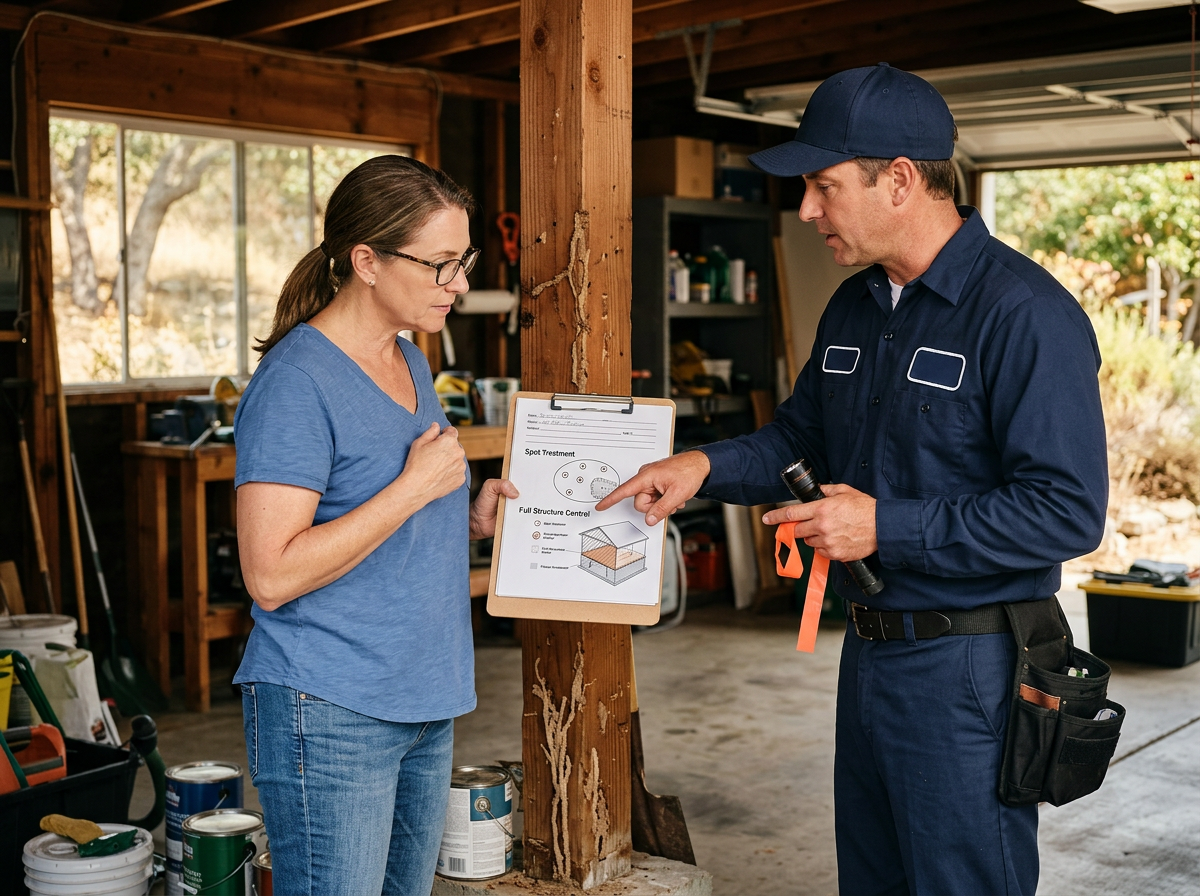
Spot treatment works for isolated drywood colonies identified through targeted inspection, while full structure termite control is required when activity extends across multiple structural zones or involves subterranean colonies that need soil treatment.
Drywood Versus Subterranean Termites in California Homes
Drywood termites produce frass pellets that collect below exit holes in wood members, while subterranean termites build mud tubes along foundations to maintain moisture. In Tehachapi and nearby foothill areas, drywood species often appear in older timber used for cabins with dirt crawl spaces. Subterranean activity increases after irrigation lines leak or seasonal rains raise soil moisture. These differences directly affect whether a localized approach or property-wide work is appropriate. Drywood termite control focuses on wood members above grade, whereas subterranean work requires access to soil perimeters.
When Spot Treatment Fits the Situation
Spot treatment applies when inspection reveals active galleries limited to one or two accessible zones, such as roof sheathing or window frames. Technicians drill small holes, inject targeted product, and monitor for continued frass production. This method avoids tenting when colonies have not reached load-bearing timbers or spread through wall voids. It also works in structures with limited access where whole-house methods would be impractical. Homeowners in areas like Keene often choose this route for seasonal cabins that show activity only in sun-exposed eaves.
When Full Structure Control Is Required
Full structure methods become necessary once inspection finds galleries in multiple rooms, live insects in wall cavities, or mud tubes connecting to the soil. Termite fumigation and tenting treats the entire envelope when drywood activity reaches attic spaces and concealed framing. Subterranean cases may instead use perimeter trenching to 6 inches below grade plus bait stations spaced at 10-foot intervals. These approaches cover hidden colonies that spot work cannot reach without repeated openings. Properties preparing for sale frequently need this scope to clear findings noted during escrow inspections.
Role of Professional Inspection in the Decision
A thorough inspection maps all evidence of activity before any treatment plan is chosen. Inspectors check crawl-space timbers for soil-to-wood contact under 8 inches, probe attic members for frass, and look for tubes along stem walls. Findings determine whether limited drilling and injection will suffice or whether tenting or soil barriers are needed. Signs of termites in Tehachapi attics and roof structures often guide this step for local homeowners. Follow-up visits after initial work confirm whether additional zones require attention.
Practical Considerations for Tehachapi Properties
Foothill cabins with seasonal use and older timber benefit from early inspection before occupancy increases. Desert-edge homes see added risk when irrigation creates moisture that supports subterranean colonies. Choosing between spot and full methods depends on the extent documented during inspection rather than assumptions about construction type. Termite treatment follow-up and monitoring in Tehachapi outlines how ongoing checks help track results after either approach. Property owners can review findings at the office located at 428 N Curry St, Tehachapi, CA 93561 before scheduling work.