
2026-09-16 ·
Signs of Termites in Tehachapi Attics and Roof Structures
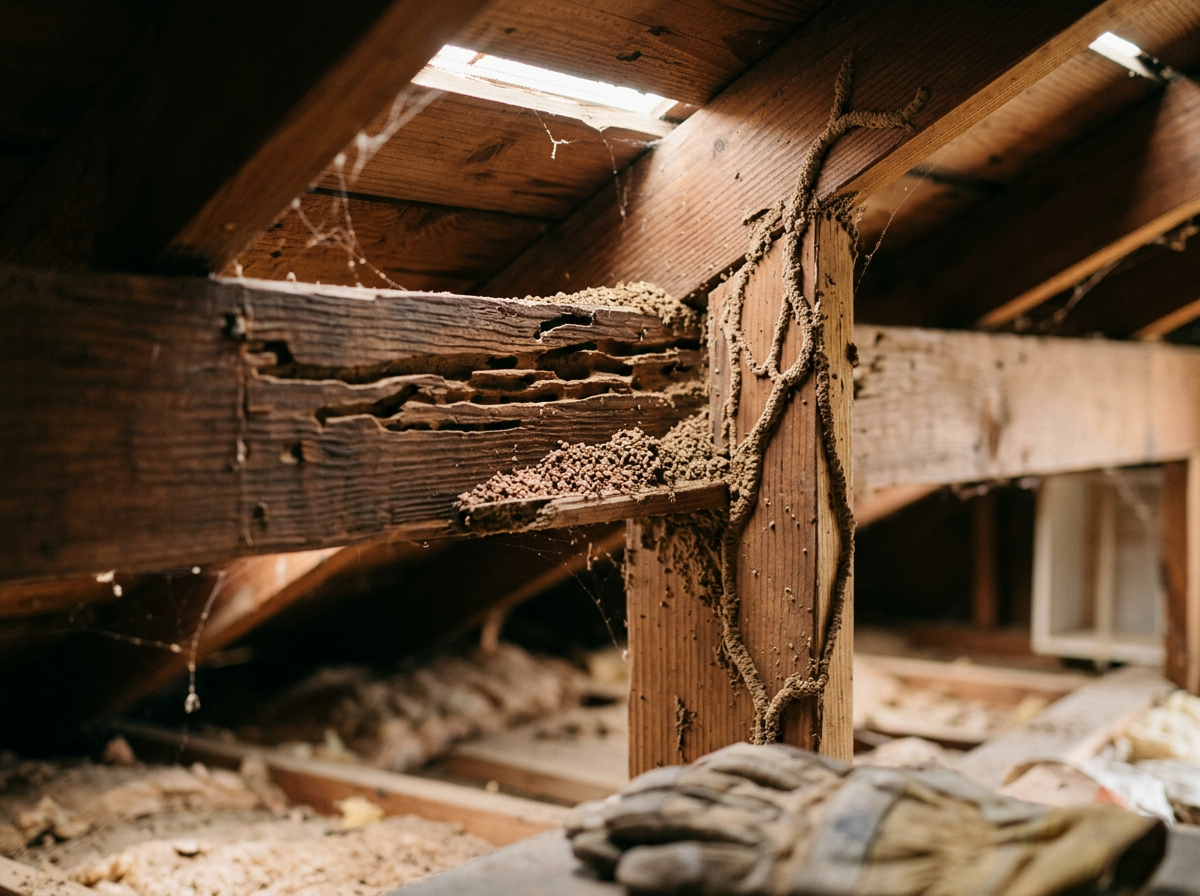
Drywood termites leave distinct frass pellets and surface wood damage in Tehachapi attics and roof structures, while subterranean species produce mud tubes along foundation-to-roof paths when moisture is present. These signs appear most often in foothill cabins with dirt crawl spaces and old-growth timber that experiences seasonal use.
Frass Pellets and Surface Damage in Attics
Drywood termites produce small, six-sided frass pellets that collect in piles beneath infested beams or rafters. Homeowners notice these pellets on insulation or attic flooring after seasonal activity peaks. The pellets differ from sawdust because they do not compress when rolled between fingers. Blistered or hollow-sounding wood along roof joists also signals internal galleries created by these insects. In Tehachapi's dry climate, colonies establish in untreated timber without needing soil contact. Checking attic spaces twice a year reveals early pellet accumulations before damage reaches load-bearing members. Wood members with less than 6 inches of clearance from soil in crawl spaces increase risk of both drywood and occasional subterranean entry.
Mud Tubes and Moisture-Related Signs
Subterranean termites build mud tubes along sill plates, foundation walls, and sometimes up into attic framing when irrigation leaks or roof runoff create damp conditions. These tubes measure about 1/4 to 1/2 inch wide and protect workers moving between soil and wood. Breaking a tube and watching for repair within days confirms active colonies. Desert-side properties near Tehachapi see increased activity after irrigation system leaks or seasonal rains. Roof structures with poor ventilation trap humidity that supports tube construction along rafters. Inspectors look for tubes connecting exterior soil to attic entries around plumbing vents or chimney bases. Maintaining 8-12 inches of clearance between soil and any wood framing reduces tube formation opportunities.
Seasonal Patterns in Tehachapi Structures
Swarming flights for drywood species in the Tehachapi area commonly occur from late summer into early fall, leaving discarded wings near attic vents or roof eaves. Homeowners may find these wings in clusters of 1/4-inch translucent scales after warm evenings. Seasonal occupancy cabins heat up during unoccupied periods, drawing termites to roof timbers. Older structures with multiple layers of roofing trap warmth that encourages colony expansion. Checking attic insulation and roof decking after September rains often reveals fresh frass that was previously hidden. Foothill properties with mixed timber species experience different damage rates based on wood density and prior weather exposure.
Inspection Approach for Roof and Attic Areas
Start by examining attic insulation for displaced pellets or small holes in wood surfaces. Use a flashlight to check rafters and collar ties for blistered paint or uneven surfaces. Probe suspect areas gently with a screwdriver to test for hollow spots without causing further damage. Look along the roof line from inside for light penetration that indicates galleries near shingles. Exterior checks include fascia boards and soffits where frass may fall onto porches. Properties preparing for sale benefit from documenting these observations before ordering a formal termite inspection. Readers can review termite treatment options for Tehachapi's dry climate to understand how different signs guide method selection.
Practical Next Steps After Finding Evidence
Once signs appear, compare pellet shape and location against known drywood versus subterranean indicators before deciding on spot treatment or broader options. Drywood termite control methods address localized attic colonies without tenting entire structures. Homeowners should also review preparing your property for termite treatment in Tehachapi when scheduling work around roof access points. Recording dates and locations of observed frass or tubes helps track activity over multiple seasons. Regular attic access and prompt attention to leaks keep roof structures sound in Tehachapi's variable foothill conditions.