
2026-09-16 ·
Termite Treatment Before Listing a Home in Tehachapi
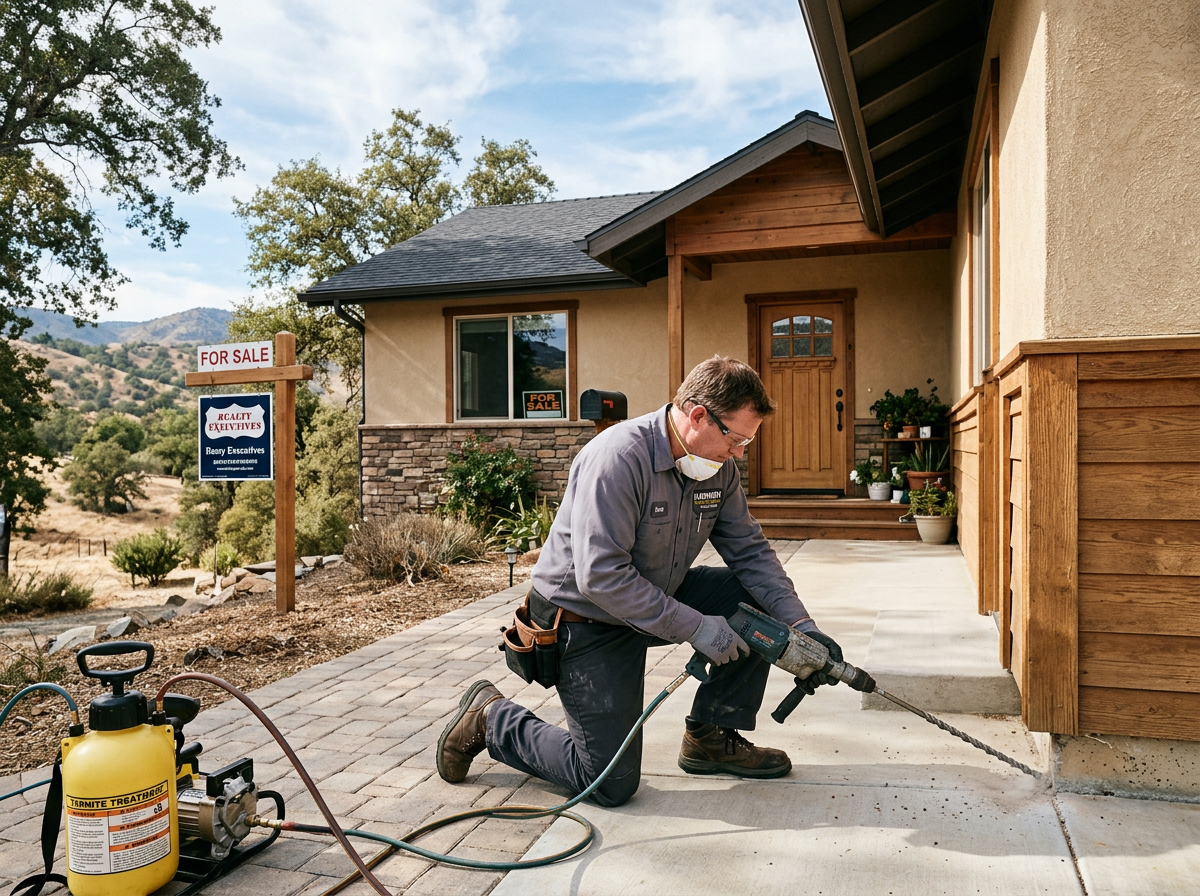
Termite treatment before listing a home in Tehachapi begins with scheduling a thorough inspection to detect drywood or subterranean activity and determine whether spot treatment, local fumigation, or soil barriers are needed to clear issues ahead of escrow.
Understanding Local Termite Activity
Tehachapi properties often sit on foothill terrain with crawl spaces containing old-growth timber, creating conditions where drywood termites produce frass pellets that fall from wood members and subterranean termites build mud tubes along foundation walls. Seasonal occupancy in cabins can allow colonies to expand undetected until a buyer orders an inspection. Drywood termites require fumigation or localized wood treatments because they live entirely within the timber, while subterranean colonies need liquid barriers applied in a 6-inch trench around the perimeter or bait stations placed every 10 feet. Irrigation around desert-edge homes can trigger increased subterranean foraging after leaks develop near the foundation. These differences dictate separate approaches rather than a single method for every structure.
Role of Inspections in the Listing Process
A termite inspection identifies active colonies and past damage before a real estate transaction begins, allowing sellers to choose between termite inspection services and subsequent control steps. In Tehachapi, inspectors check attic spaces, crawl areas, and exterior soil for signs such as discarded wings near windows or mud tubes rising from grade. Findings feed directly into escrow documentation, where buyers and lenders expect documented resolution of visible issues. Sellers who complete treatment early avoid delays once offers arrive. The process also covers detached garages and storage buildings that frequently harbor separate colonies.
Treatment Choices for Drywood and Subterranean Termites
Drywood termites in Tehachapi homes are commonly handled through whole-structure tenting that requires occupants to vacate for 2 to 3 days while the structure is sealed and fumigated, or through targeted wood injections when colonies remain localized. Subterranean termites respond to soil-applied liquids placed in trenches 6 inches deep and 6 inches wide along the foundation, or to bait stations installed at intervals of 10 to 20 feet depending on soil conditions. Cabin owners with dirt crawl spaces and limited access often combine both strategies because old timber can host drywood activity while soil contact encourages subterranean colonies. Termite treatment plans are selected after the inspection maps the extent of each infestation.
Preparing Documentation for Escrow
Sellers coordinate treatment results with escrow and Section 1 termite reports so that required repairs appear completed before closing. The report notes the type of termite found and the method used, giving buyers and agents clear records. Addressing findings promptly prevents last-minute negotiations that can reduce sale price or extend timelines. Properties with crawl-space access benefit from clearing debris and improving ventilation beforehand so inspectors can reach all timbers. Early action also lets sellers schedule work during milder months when tenting crews have better availability.
Next Steps After Treatment
Once treatment finishes, homeowners review follow-up inspection notes to confirm activity has stopped and any recommended wood repairs are scheduled. What Tehachapi homeowners should expect during a termite inspection outlines the areas checked and the timeline for results. Cabins and outbuildings may need separate visits because seasonal use can mask ongoing issues until the next occupancy period. Handling termite issues in Tehachapi cabins and outbuildings provides additional guidance on protecting detached structures that often accompany main residences. Completing these steps before listing keeps the transaction focused on the home rather than unresolved pest conditions.