
2026-09-16 ·
Eco-Friendly Termite Control Methods Used in Tehachapi
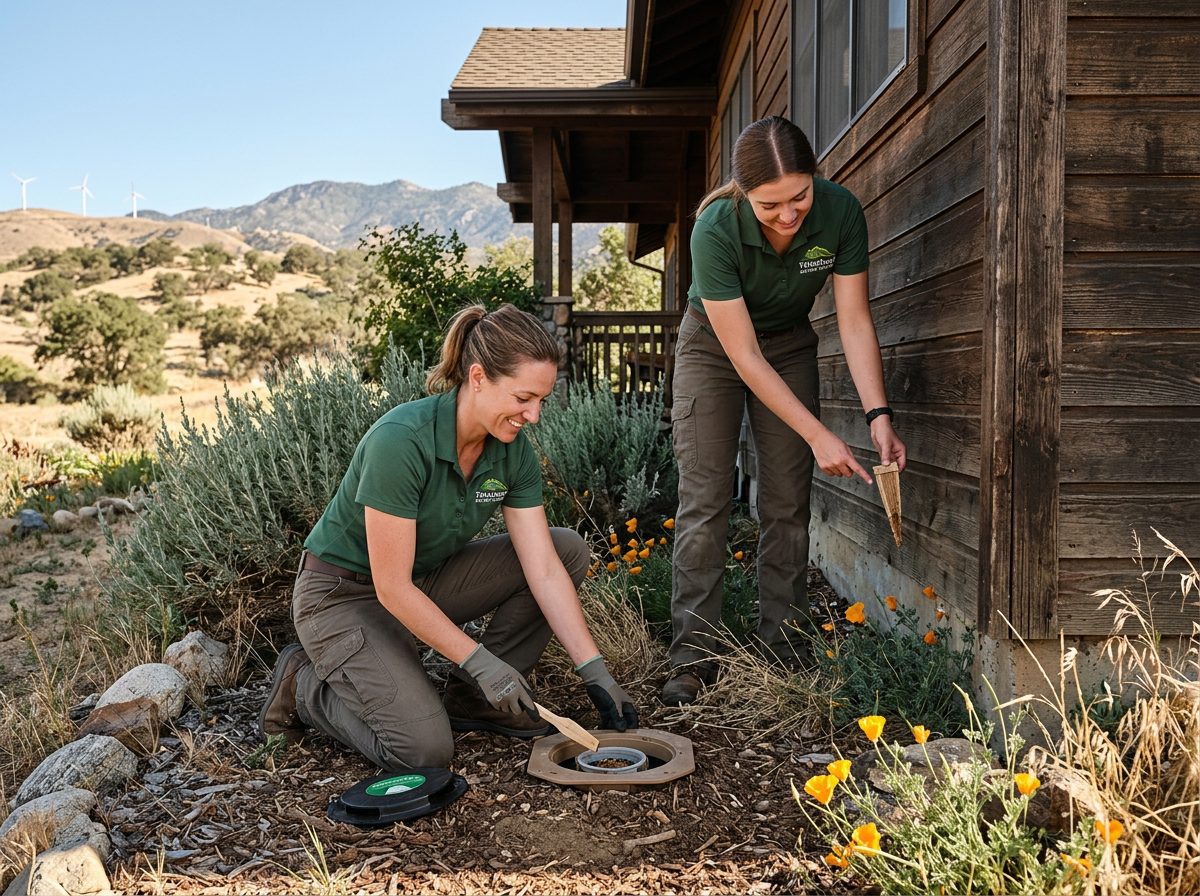
Eco-friendly termite control in Tehachapi centers on integrated pest management that combines monitoring with targeted bait stations for subterranean species and spot applications for drywood termites instead of routine whole-structure fumigation.
Matching Methods to Local Termite Species
Tehachapi sits in a transition zone between mountain foothills and high desert, where both drywood and subterranean termites appear. Drywood termites produce frass pellets that homeowners notice near window sills or baseboards, while subterranean termites build mud tubes along foundation walls. Control starts with correct identification because the two groups respond to different low-impact tactics. Bait stations placed in the soil intercept subterranean foragers before they reach structural wood. For drywood colonies inside beams or siding, technicians drill small access holes and apply borate dust or foam that the insects carry back to nestmates. These steps reduce the volume of material introduced compared with tenting an entire cabin.
Bait Systems for Subterranean Termites
Bait stations are installed around the perimeter after an inspection maps active tubes and foraging trails. Each station contains a slow-acting matrix that foraging termites share with the colony. In Tehachapi’s dry soils, stations are checked on a schedule that accounts for seasonal irrigation around cabins and homes, since added moisture can increase activity. When monitoring shows reduced activity, stations remain in place for ongoing detection rather than repeated soil drenching. This approach aligns with the dry climate by avoiding large liquid barriers that can leach during rare heavy rains. Property owners in nearby areas such as Keene follow similar station placement patterns suited to foothill crawl spaces.
Localized Treatments for Drywood Termites
When pellets or damaged wood point to drywood termites, crews limit treatment to the affected boards or joists. Small holes allow insertion of borate products or insect growth regulators that disrupt the colony without requiring tenting. This method suits seasonal cabins with old-growth timber where full fumigation would mean vacating for several days. Crews also recommend trimming vegetation that touches siding and maintaining at least six inches of clearance between soil and wood to reduce future entry points. Such targeted work fits Tehachapi’s mix of year-round homes and weekend properties where residents prefer minimal disruption.
Ongoing Monitoring and Property Adjustments
Regular inspections remain central to any eco-friendly program. Technicians look for new frass, fresh tubes, or changes in wood moisture after leaks or irrigation. Follow-up visits allow adjustment of bait stations or additional spot treatments before colonies expand. Homeowners can support these efforts by fixing irrigation leaks promptly and storing firewood away from structures. For readers planning treatment, the article on termite treatment options for Tehachapi’s dry climate outlines seasonal timing considerations. Properties preparing for sale may also review details on drywood termite control and subterranean termite control to understand inspection findings without assuming clearance language.